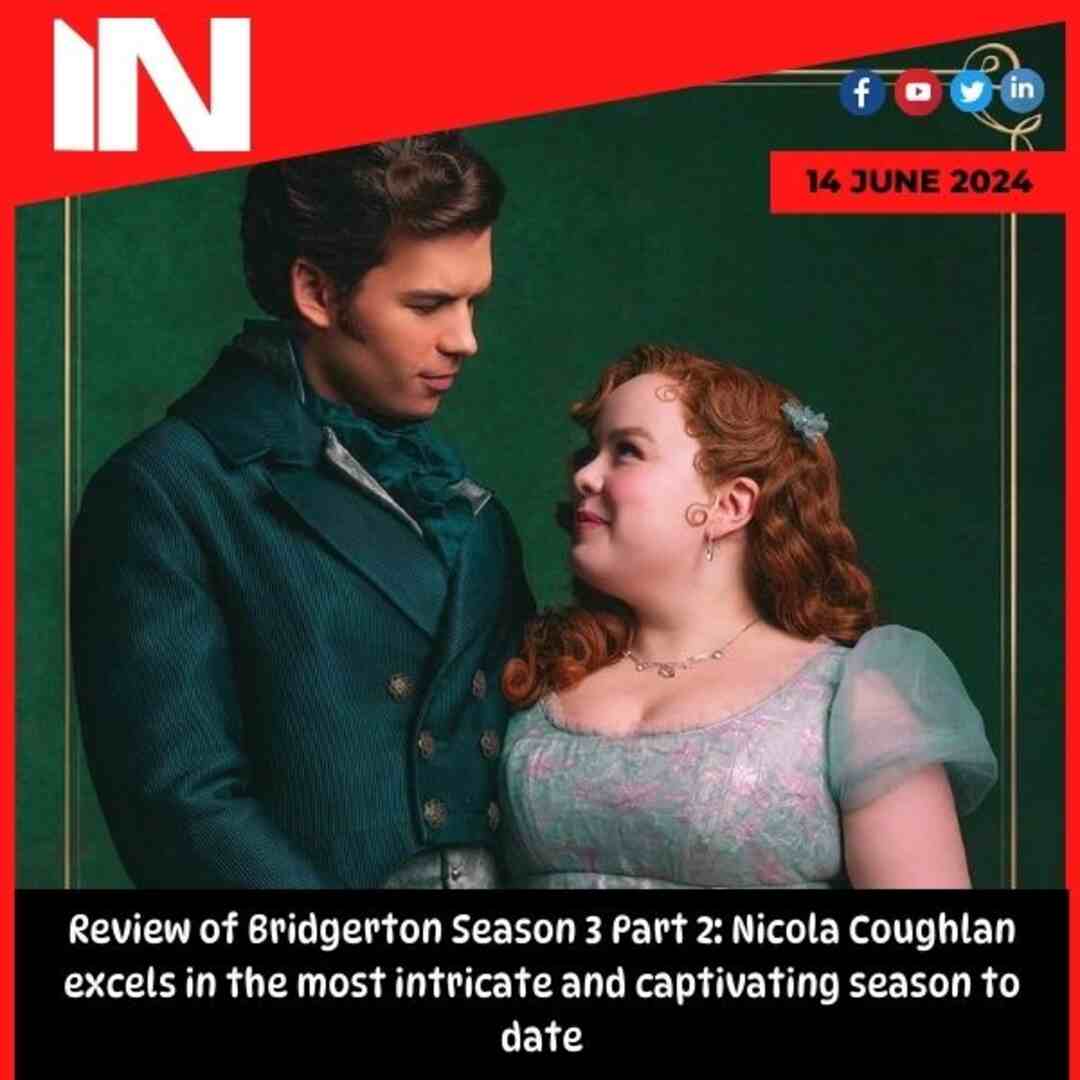
I’m starting to believe that splitting the third season of Bridgerton into two episodes was a wise move. Almost a month after Part 1 debuted on Netflix, Part 2 is now available. The distance helps to digest the multiple turns this part makes, sometimes all at once. Part 2 packs a lot more punch than Part.
which was just about Penelope and Colin breaking their friend zone for a lengthy carriage make-out session. The supporting cast members show up, a social scandal poses a threat, and there’s even a trio involved. There’s no denying that even while not all of the risks pay out, there’s no doubt this is the most complex and mercurial season of the ton.
Even though Colin (Luke Newton) is still unaware of Penelope’s great secret, they inform the family of their engagement at the start of Part 2. If Penelope refuses to reveal Lady Whistledown’s true identity, Eloise (Claudie Jessie) threatens to do it herself. Penelope must thus make a snap decision regarding her priorities: does she want to maintain the Bridgerton family name or does she want to have her own voice? The main force drawing in the several secondary characters is this fight.
Advertisement
Queen Charlotte (Golda Rosheuvel) is determined to win Lady Whistledown over in any way she can, and she is offering a financial reward to anyone who can figure out who she is. There’s the scene-stealing Jessica Madsen as Cressida Cowper, whose future doesn’t seem to be looking very well just now.
In the meantime, Victor Alli’s character Francesca Featherington (Hannah Dodd) is adamant about her love for Lord John Stirling, the Earl of Kilmartin. Although Benedict’s (Luke Thompson) developing passions add needless spice to the story, these arcs give the narrative plenty of momentum. After a while, it just goes nowhere and seems to lessen the intensity of the other arcs. But with their scorching chemistry, Coughlan and Newton are having the season’s hottest moment.
Part 2 may seem overwhelming and a little bit too long because there is so much more to share and so many surprises in store. Despite this, the play perseveres thanks to its excellent technical elements and captivating desire to amuse. Production designer Alison Gartshore’s work is still astounding, and her efforts are ably bolstered by intricately fanciful costumes designed by John Glaser.
especially for Penelope and Queen Charlotte. This drama set in the Regency era, which focuses on issues of female autonomy, motherhood, beauty, and privilege, has a palette that feeds on richness and excess, which has finally matured into the narrative grammar this time around. The programme structures. This clash of two exclusive tendencies in Bridgerton infuse a strength and complexity that was missing in the earlier seasons.
Advertisement
The primary bond between Penelope and Colin is at the centre of all of this. With his pursuit of the truth and a dose of common sense, Newton improves in the second half, but this season’s breakout star is still Nicola Coughlan. In a performance rich in subtlety and intelligence, she inwardly projects a great deal of Penelope’s grief, anxiety, and stress. She no longer only writes about rumours and scandals.
Right now, she is the scandal. But how is she going to get over this? The disdain and the terror of being alone persist. Will she make sense to Colin? Bridgerton allows its beautiful lead character the necessary time and room to make her own decisions about what to do next.
Ali Fazal is now a global giant, but his rise was fraught with danger. Before becoming the renowned, muscle-bound, gun-toting Guddu Pandit of Mirzapur, he faced a horrible crossroads. He was a rising star in Indian cinema, having previously charmed audiences with sweet, romantic, and Hollywood roles. Then, a dark, gritty script appeared on his desk. It was violent, raw, and utterly unprecedented in Indian streaming. The actor reportedly admitted that he was struck by extreme anxiety before signing the contract. The apprehension sprang not only from the prospect of playing a merciless mobster, but also from heated, frightening warnings from industry insiders.
Table of Contents
The Ominous Warnings From Bollywood Insiders
When Ali Fazal first began discussing the role of Guddu Pandit, his industry colleagues were overwhelmingly unfavourable. Several filmmakers and instructors advised him against entering the gloomy realm of Mirzapur. OTT platforms in India were still in their early stages at the time. The established conventions of Bollywood mandated that a starring male should remain on the silver screen. Insiders warned him that producing a web series would be a major setback for his career. They cautioned him that portraying a foul-mouthed, violent character would forever damage his romantic hero image.
Gripped By Terror and Deep Self-Doubt
The actor was under intense psychological pressure. “I was scared at that time,” Ali Fazal confessed bluntly in a recent interview. He was scared that he was making a huge mistake. The character’s extreme ferocity necessitated a comprehensive physical and emotional redesign. He questioned if he could carry off such a threat without losing his current fanbase. The fear of failure loomed huge, prompting him to mistrust his artistic inclinations. Every piece of advise he received told him to abandon the project, leaving him feeling incredibly isolated.
Shattering the Traditional Hero Stereotype
Despite his enormous apprehension, something deep within Ali Fazal compelled him to take the plunge. He understood that the world of storytelling was changing rapidly. He chose to buck the traditional thinking of Bollywood hitmakers, who preferred safe, formulaic films. Stepping into Guddu Pandit’s shoes required him to entirely abandon his vanity. He gave in his elegant, clean-cut appearance for bulked-up muscles, a shaved head, and a limp. It was a violent rejection of the traditional hero stereotype that had held back Indian actors for decades.
Advertisement
A Risk That Rewrote Indian Streaming History
The gambit came off in an unexpected way, surprising even his sharpest critics. Mirzapur’s release was not only successful; it also became a cultural phenomenon. Ali’s scary yet extremely empathic portrayal of a youngster trapped into a criminal life gripped audiences right away. The very filmmakers who had cautioned him away were now screaming his praises. His performance demonstrated that Indian audiences are hungry for nuanced, flawed individuals. He not only saved his career by embracing his innermost anxieties, but he also revolutionised what it means to be a celebrity in the digital age.
Embracing The Fear To Find Greatness
Looking back, Ali Fazal sees the moment of tremendous dread as a crucial trigger for his development. The event taught him that the most rewarding artistic successes are frequently hidden behind our worst fears. If he had followed the cautious, conservative recommendations of the industry elite, the world would not have witnessed Guddu Pandit’s brilliance. His journey serves as a striking example of trusting one’s creative intuition above industry gossip. For Ali, fear was no longer a call to retreat, but rather a clear indication that he was about to create something truly special.





.png "Four years after her divorce, did Samantha Ruth Prabhu get rid of her tattoo with the Naga Chaitanya link? Supporters are persuaded")