
Web Series
Netizens review: Squid Game Season 2’s poor conclusion infuriates viewers, who label it a “complete waste of time.”

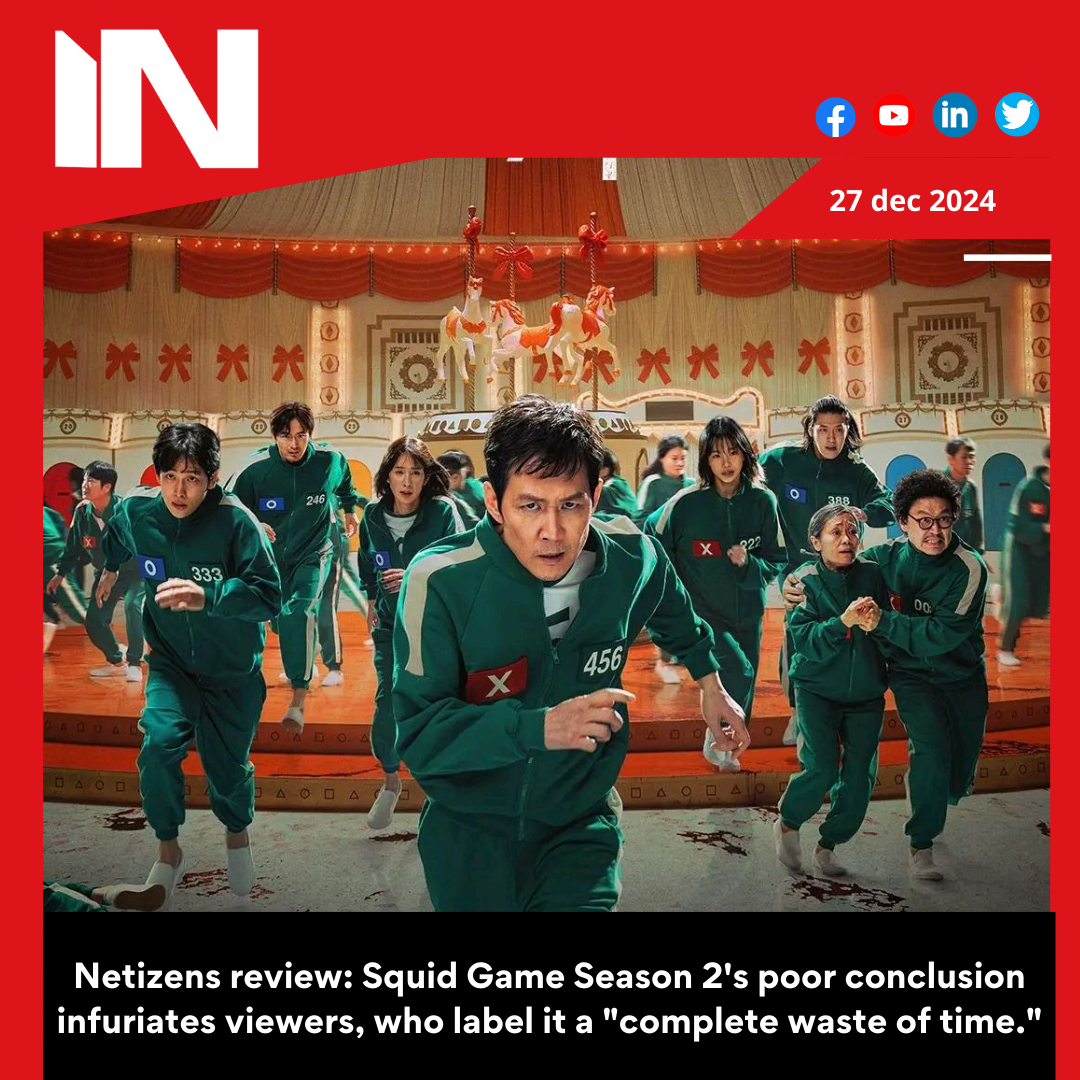
Squid Game S2 dropped this week, but instead of wrapping up its gripping story, it ended rather upsettingly; fans took to X to vent their disappointment
The long-awaited Squid Game Season 2 landed on Netflix this week, only to leave fans seething with disappointment.
What was expected to be another gripping installment of the South Korean dystopian thriller instead sparked outrage, with many branding the season a colossal waste of time. Furious viewers flooded social media, venting their frustration on X over what they deemed an underwhelming and infuriating finale.
describing season 2 as “half a season” and advising fellow fans to wait until season 3. “Just hold yourself till s3 is out. I don’t really feel the excitement like I felt from s1. First two eps are good, but I skipped a lot of scenes.
It feels like they stretched this season unnecessarily,” one viewer posted. Another quipped, “Don’t bother until Season 3 comes out. Complete waste of time. The final episode does NOT feel like the finale of an entire season.”
Table of Contents
Brief of Season 2
The Salesman alongside a few new faces including North Korean refugee No-eul (Park Gyu-young), henchmen Woo-seok and Mr. Kim (Jun Suk-ho and Oh Dal-su) as well as former crypto influencer Player 333 – Myung-gi also aims to delve further into the Front Man’s troubled past and his fraught connection with Jun-ho but has fallen short on this front according to the disappointed watchers.
Despite the backlash, the cliffhanger has undeniably set the stage for a highly anticipated third instalment. While Squid Game is no stranger to leaving its audience wanting more, this time, it was maybe a little too much.
Squid Game” Season 2, released in December 2024, has sparked a wave of criticism from viewers who feel the series failed to meet the high expectations set by its groundbreaking first season. Many fans have expressed their dissatisfaction, labeling the conclusion a “complete waste of time.”
Viewer Discontent:
A significant point of contention among fans is the perceived decline in originality and the repetitive nature of the storyline. Some viewers have noted that the second season lacks the fresh and innovative elements that made the first season a global sensation. This sentiment is echoed in various online discussions, where fans have expressed their frustration with the series’ direction.
Critical Reception:
Critics have also weighed in on the season’s performance. While some acknowledge the challenges in replicating the shock value of the first season, they commend the series for its continued engagement and character development. For instance, Annabel Nugent from The Independent gave the season 4 out of 5 stars, stating that while it wasn’t as shocking as the first season, it was still captivating in its violence.
Production Oversights:
In addition to narrative critiques, fans have pointed out production errors that detract from the viewing experience. A notable example is a scene where a cameraman is visible during a battle, an oversight that has been widely discussed on social media platforms.
In summary, while “Squid Game” Season 2 has achieved significant viewership, it has also faced considerable criticism from both fans and critics. The series’ conclusion has left many viewers feeling disappointed, highlighting the challenges in meeting the high expectations set by its predecessor.
Fans spot big gaffe in Netflix hit Squid Game

Sources
Group Media Publications
Entertainment News Platforms – anyflix.in
Construction Infrastructure and Mining News Platform – https://cimreviews.com/
General News Platform – https://ihtlive.com/
Legal and Laws News Platforms – https://legalmatters.in/
Podcast Platforms – https://anyfm.in/



.png "Four years after her divorce, did Samantha Ruth Prabhu get rid of her tattoo with the Naga Chaitanya link? Supporters are persuaded")





-
 Celebrity News4 weeks ago
Amitabh Bachchan: The Heartbreaking Anxiety of Bollywood’s Greatest Icon
-
 Fashion2 months ago
Aishwarya Rai Mesmerizes Cannes in a Breathtaking Blue Gown
-
 Hollywood Romance2 months ago
Brad Pitt and Ines de Ramon Shatter Big Wedding Dreams
-
 Bollywood News2 months ago
Ananya and Lakshya’s Chand Mera Dil Suffers Heartbreaking Censor Shock
-
 Celebrity News2 months ago
Bruce Willis’ Heartbreaking Dementia Battle Awakens a Tender Transformation
-
 Celebrity News2 months ago
Amitabh Bachchan Fan Faints After Hours of Torturous Waiting
-
 Hollywood2 months ago
Michael Rules #1, Smashing $700 Million with Historic Triumph
-
 Upcoming Movies2 months ago
Jenna Ortega’s Thrilling New Role In Lily May B